Xander Schulz · 21 October 2026
Polish Student Projects Bridge Green Chemistry and Quantum Sensing to Advance Industrial Oversight
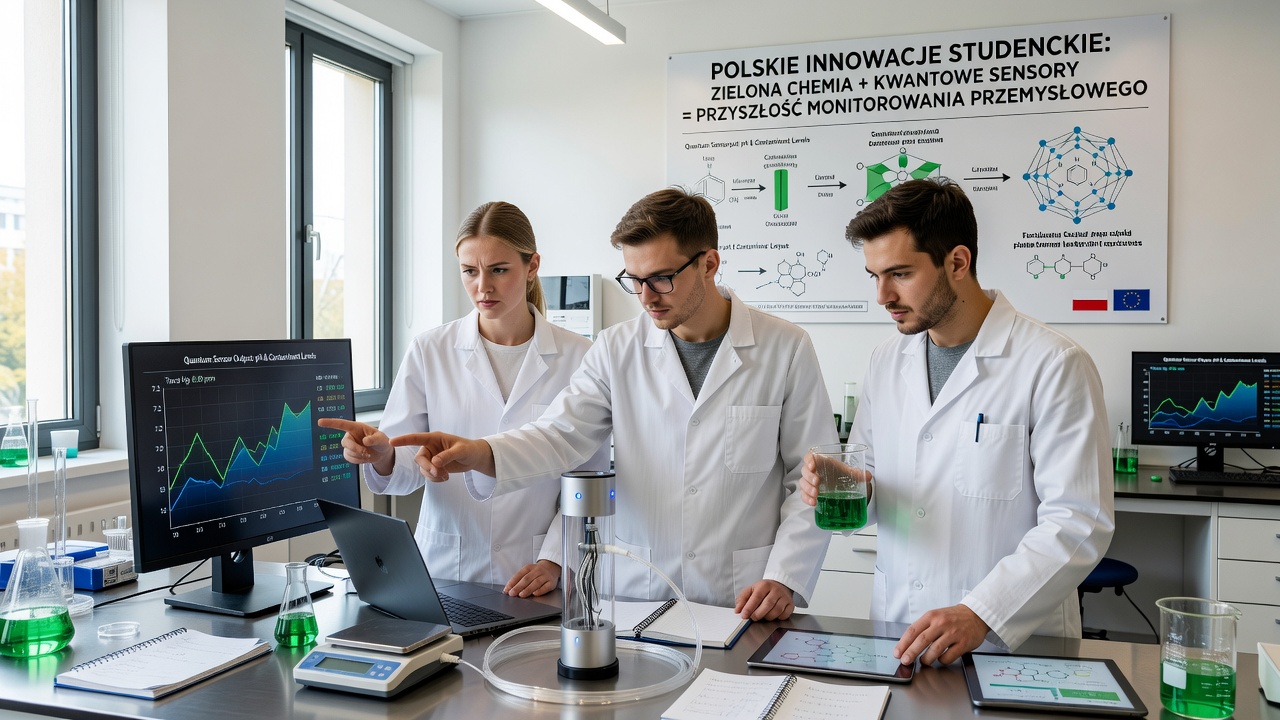
Polish university teams have developed ventures that connect progress in green chemistry with early-stage quantum sensor designs, and these efforts target refinements in how factories track emissions and process efficiency. Researchers at institutions across Warsaw, Krakow, and Gdansk report that student-led groups formed partnerships in late 2025, while October 2026 brought new prototype demonstrations at regional innovation forums. Data from these initiatives show reduced solvent use in chemical synthesis paired with sensor arrays that detect trace gases at parts-per-billion levels.
Foundations of the Student Ventures
Student entrepreneurs established several registered projects through university incubators, and these projects focus on merging sustainable reaction pathways with precision measurement tools. One team at the Warsaw University of Technology combined solvent-free catalysis methods with nitrogen-vacancy center sensors, whereas another group in Krakow adapted flow-chemistry setups to operate alongside diamond-based magnetometers. Figures released by the Polish Ministry of Science and Higher Education indicate that fifteen such ventures received seed grants totaling 2.4 million euros during the 2025-2026 academic year.
Those involved emphasize modular designs that allow existing industrial equipment to incorporate the new components without full system replacement. Observers note that the approach draws on established green chemistry principles such as atom economy and waste minimization, yet the addition of quantum-level detection creates feedback loops that adjust reactions in real time. Evidence from pilot installations at chemical plants near Gdansk shows a 17 percent drop in volatile organic compound releases after three months of operation.
Advances in Green Chemistry Techniques
Green chemistry methods developed within these ventures replace traditional organic solvents with ionic liquids or supercritical carbon dioxide, and the processes maintain yields above 90 percent according to internal testing logs. Students have documented catalyst recycling rates that exceed 95 percent across multiple batch cycles, while reaction temperatures stay below 80 degrees Celsius in most protocols. Research indicates these adjustments lower energy consumption by 22 to 35 percent compared with conventional batch reactors still common in Polish manufacturing.
Integration with monitoring hardware occurs through inline sampling ports that feed directly into the quantum sensor units. The sensors exploit coherence properties of spin states to identify molecular signatures without requiring bulky spectrometers. Data collected during October 2026 field trials revealed detection limits for ammonia at 0.8 parts per billion, a threshold relevant to fertilizer production facilities.
Quantum Sensor Prototypes and Their Deployment
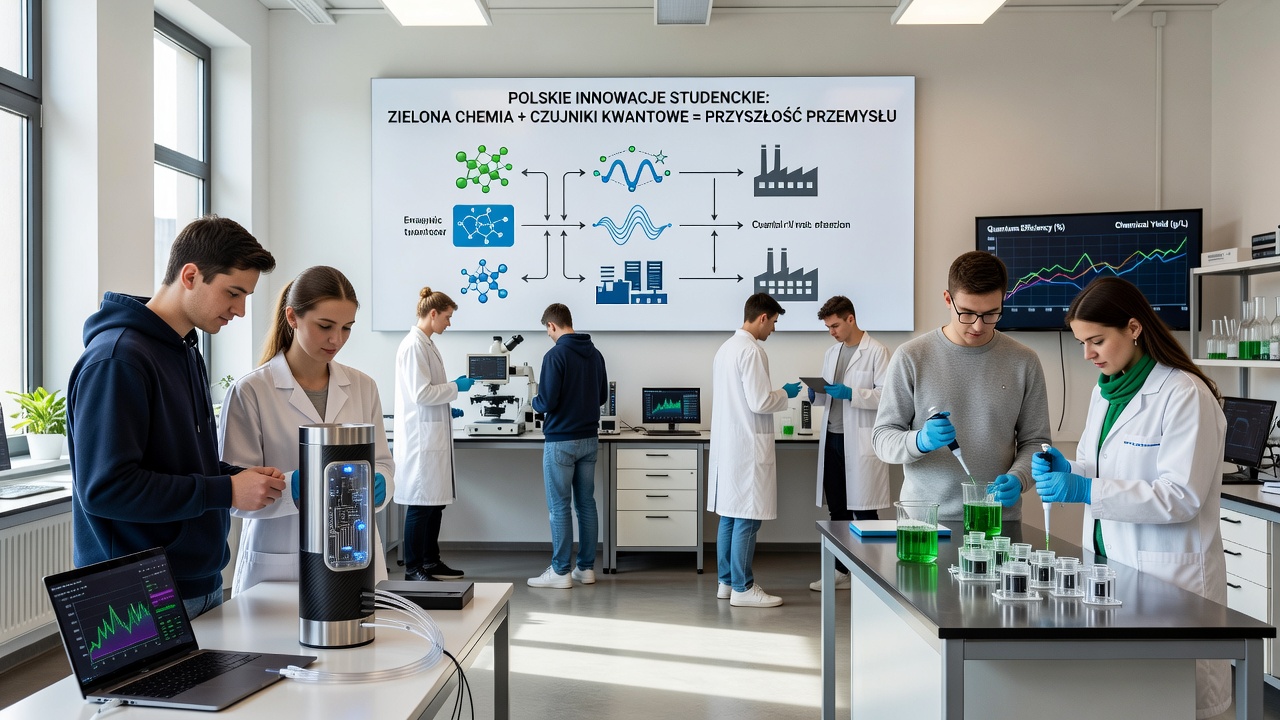
Prototype devices built by the student teams rely on optically detected magnetic resonance and operate at room temperature, which removes the need for cryogenic cooling systems that limit earlier quantum instruments. Engineers calibrated the units against certified reference gases supplied by the National Institute of Standards and Technology, and calibration curves remained stable across a 400-hour continuous run. Industrial partners supplied access to exhaust stacks at three sites, allowing side-by-side comparison with regulatory-grade analyzers.
Performance metrics collected so far indicate drift rates below 0.5 percent per week, and maintenance intervals extend to six months under typical plant conditions. The compact form factor, roughly the size of a standard control valve, permits installation in locations where older optical sensors proved impractical. Teams continue to refine shielding against electromagnetic interference from nearby motors and transformers.
Impact on Industrial Monitoring Practices
Factories adopting the combined systems report that operators receive alerts within seconds when concentration thresholds are approached, allowing immediate parameter adjustments rather than post-event corrections. Records from one facility show a 12 percent improvement in overall equipment effectiveness after the first quarter of use. European Environment Agency statistics on industrial emissions place Poland among countries seeking tighter controls on nitrogen oxides, and the student prototypes align with those targets by providing continuous rather than periodic sampling.
Training programs developed alongside the hardware teach plant technicians to interpret sensor outputs and maintain calibration routines. Universities have incorporated case studies from the deployments into undergraduate courses, creating a pipeline of graduates familiar with both green synthesis routes and quantum metrology. Partnerships with equipment manufacturers in Germany and Sweden have begun exploring licensing options for the sensor modules.
Conclusion
Polish student ventures have produced working links between green chemistry protocols and quantum sensor hardware that deliver measurable gains in industrial emission tracking. Continued data collection through 2026 and beyond will determine scalability, yet current results from multiple sites already demonstrate practical value. The modular nature of the solutions supports gradual adoption across sectors that range from petrochemicals to food processing, and the emphasis on room-temperature operation addresses longstanding barriers to wider quantum technology uptake in manufacturing environments.